


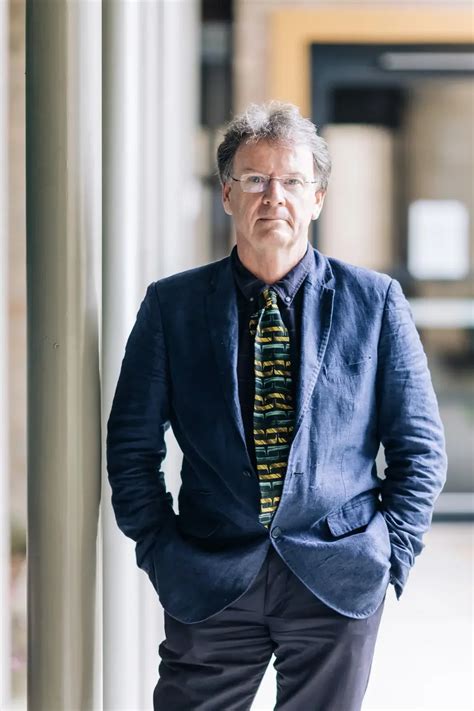
Michael Hawton, lead psychologist for The Anxiety Project, will share a school-wide approach responding to rising child anxiety at a free event in Byron Bay next month.
Australian children’s mental health has declined over the past two decades, yet the usual responses have barely changed in that time. This psychologist and former teacher says it is time to rethink where the effort and the funding go.
Michael Hawton, lead psychologist for The Anxiety Project, will present his case at a special event hosted by Byron Bay Rotary at Byron Bay RSL Club on Tuesday 17 November at 6.30pm. He will be joined by the independent evaluators of the project, who will share what they have found in participating schools.
‘Traditional forms of therapy, such as one-to-one counselling, will not on their own future-proof our children,’ Mr Hawton said. ‘If we want to see widespread improvement, we need interventions that work at the scale of the problem.’
The scale is significant
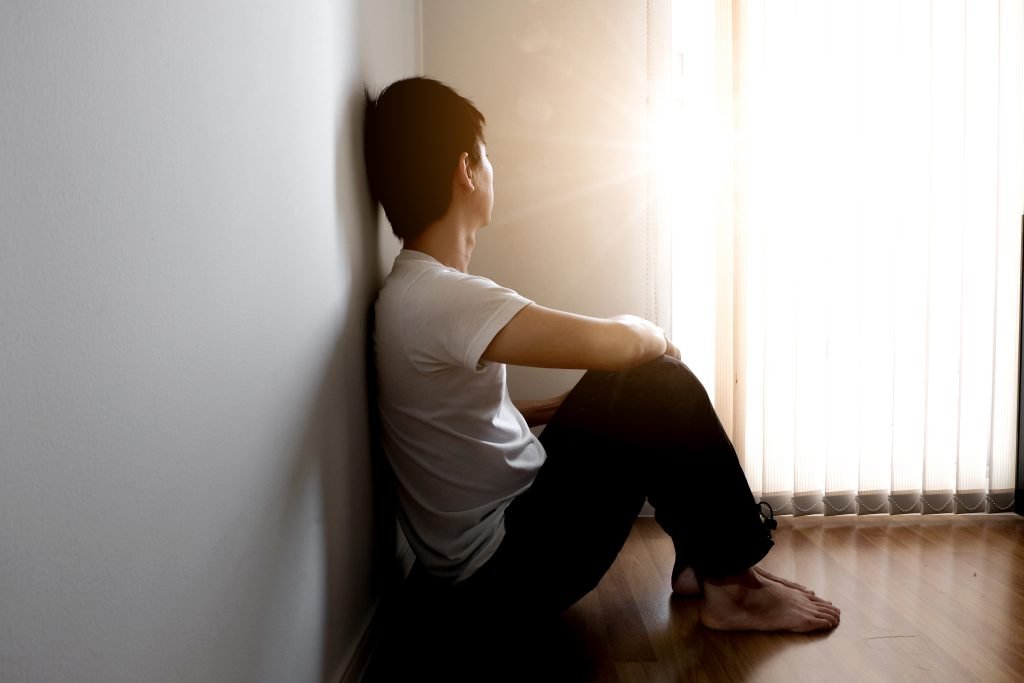
Almost one in three Australians aged 16 to 24 (31.5 per cent) experienced an anxiety disorder in the previous 12 months, according to the Australian Bureau of Statistics’ National Study of Mental Health and Wellbeing. Many of these difficulties begin in the primary school years, long before they are diagnosed.
Mr Hawton said governments tend to respond by funding more psychologists and mental health nurses because it is the most visible solution available.
‘Clinicians matter, and they will always be part of the answer,’ he said. ‘But the need is now so large that adding more appointments will never reach every child who is struggling. Before we budget for the next decade, we need to ask where the money will make the greatest difference.’
Some large-scale programs already teach mental health lessons in schools. Mr Hawton said many of these place the responsibility for change on the child, without looking at how everyday interactions between adults and children can unintentionally keep anxiety going.
Large studies involving thousands of students have also found that school-based meditation programs, often a central feature of these lessons, produced little measurable benefit, with some evidence that students who were already struggling may have been worse off.
The encouraging news, Mr Hawton said, is that childhood anxiety is one of the most treatable mental health conditions children face. ‘What works is a response led by teachers, parents and school systems together,’ he said. ‘When we change the culture of a school, and the kinds of conversations adults have with children every day, we build the conditions for children to flourish.’
Resilience
Central to the Anxiety Project’s approach is the idea that resilience can be taught and built.
In his book The Anxiety Coach, Mr Hawton writes: ‘By helping children develop narrative structure (threads of how they talk to themselves in their heads) that err on the side of thinking accurately and proportionally, we can also help them think in healthy ways.
‘If we can help children to navigate difficult moments, helping them thread together different coping narratives, they will become mentally stronger.’
The free Byron Bay event will bring together education, business and community leaders, along with anyone concerned about the wellbeing of local children, to hear how schools can respond to child anxiety at a fraction of the cost of employing more clinicians.
‘A solution to anxiety in our schools’, with Michael Hawton of The Anxiety Project, will be happening on at the Byron Bay RSL Club, Tuesday 17 November 2026, at 6.30pm.
The event is free.
